
What is a
CT scan?
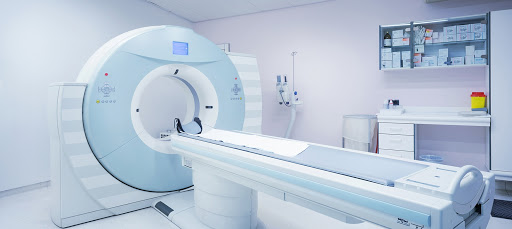
A CT scan (computed tomography, or CAT scan) uses a special X-ray machine to take detailed pictures of the organs and tissues. CT pictures are far more detailed than a standard X-ray. CT is useful because it can show many types of organs (liver, spleen, pancreas, kidneys, lower gastrointestinal tract, colon, and rectum) at the same time.
How does it work?
Many X-ray beams are passed through at many angles, and special detectors measure the amount of radiation absorbed by different tissues. The X-ray tube revolves around you, and sends and records data from many angles, forming cross-sectional pictures (slices) of the area. The pictures are then reviewed on a computer screen.
How is the CT scan performed?
The CT technologist will place you on the CT table, using pillows to help you maintain the correct position during the scan. For the first few scans, the table will move quickly through the scanner to check the correct starting position. The rest of the scans are made as the table moves more slowly through the hole in the scanner. A CT exam usually takes 10-30minutes. When the exam is over, you may be asked to wait until the images are checked to find out if more images are needed.
What will I feel during the procedure?
CT scanning causes no pain, and with spiral CT, the need to lie still for any length of time is reduced. For exams of the abdomen and lower gastrointestinal tract, you may be asked to swallow water or a positive contrast material, a liquid that allows the radiologist to better see the stomach, small bowel, and colon.
You will be alone in the room during the scan; however, the technologist can see, hear and speak with you at all times. For pediatric patients, a parent may be allowed in the room with their child to help reduce fear and provide comfort.
NMHC
Naturo-Medical Health Care is the Best Choice for your Health.
Quick Links
Our Awards

NMHC is a multiple Award Winner
Best Patient Care 2017
Best Practice & Team 2016
Best Patient Care 2014
© NMHC 2024, All Rights Reserved
© NMHC 2024, All Rights Reserved
Updates by Tass